

Geotextile Fabric Under Pavers
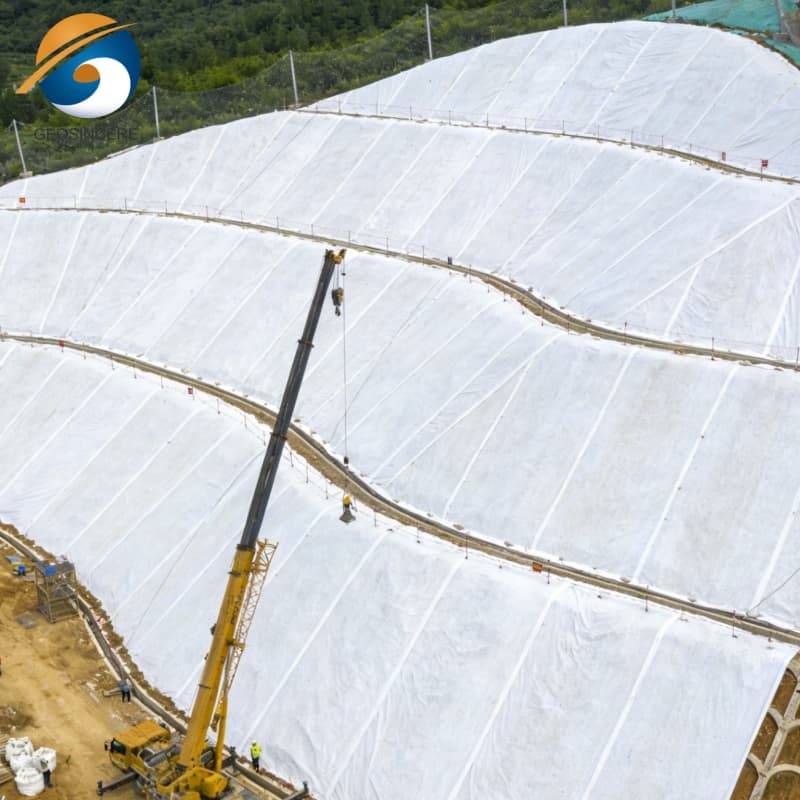
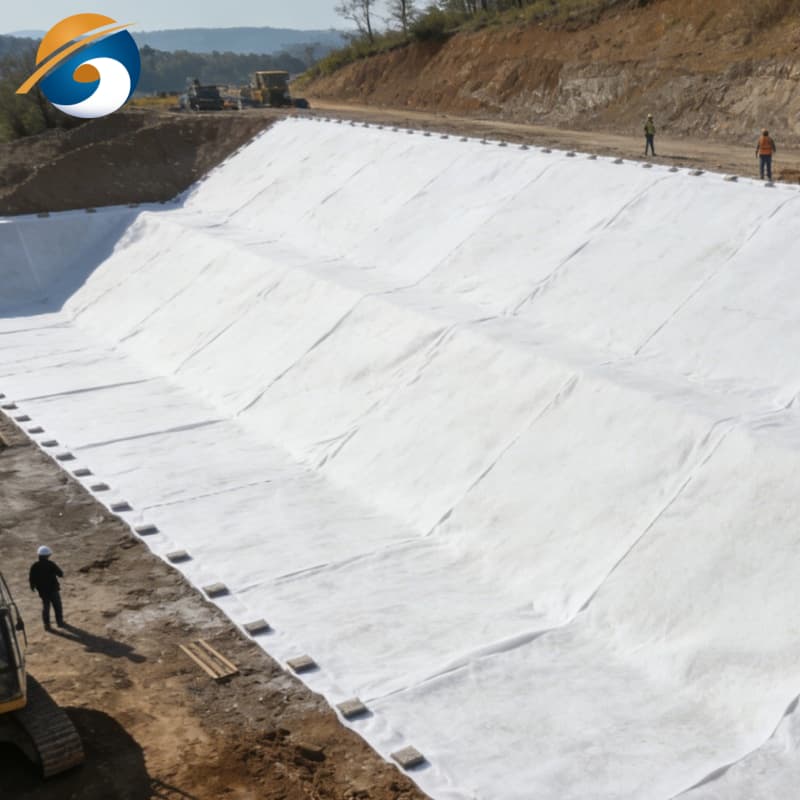
Geotextile fabric under pavers is a high-performance foundation material designed to improve soil stability, drainage, and load support in paving systems. It acts as a protective separation layer between subgrade soil and base aggregates, preventing contamination and reducing long-term settlement. Widely used in driveways, patios, walkways, and commercial pavements, this geotextile fabric helps extend the service life of paver installations while maintaining a smooth and durable surface.
- Excellent soil separation to prevent base layer contamination
- High tensile strength for improved load distribution
- Permeable structure for efficient water drainage
- Reduces rutting, sinking, and surface deformation
- Enhances pavement durability and lifespan
- Easy to install and compatible with most paving systems
Geotextile fabric under pavers is a kind of high-performance geosynthetic material that functions to increase the stability, durability, and drainage of the paved surface. When placed between the subgrade soil and the aggregate base layer, it acts as a dependable separation, filtration, and reinforcement layer.
Geotextile fabric prevents soil particles from the subgrade from mixing with the base material, which retains the structural strength and limits the deformation of the pavements in the long run. This useful product is intensively applied in a wide range of paving projects, such as driveways, patios, walkways, plazas, and modular paving systems, at the residential, commercial, and industrial levels.
1. Geotextile Fabric Under Pavers - Material Composition and Structure
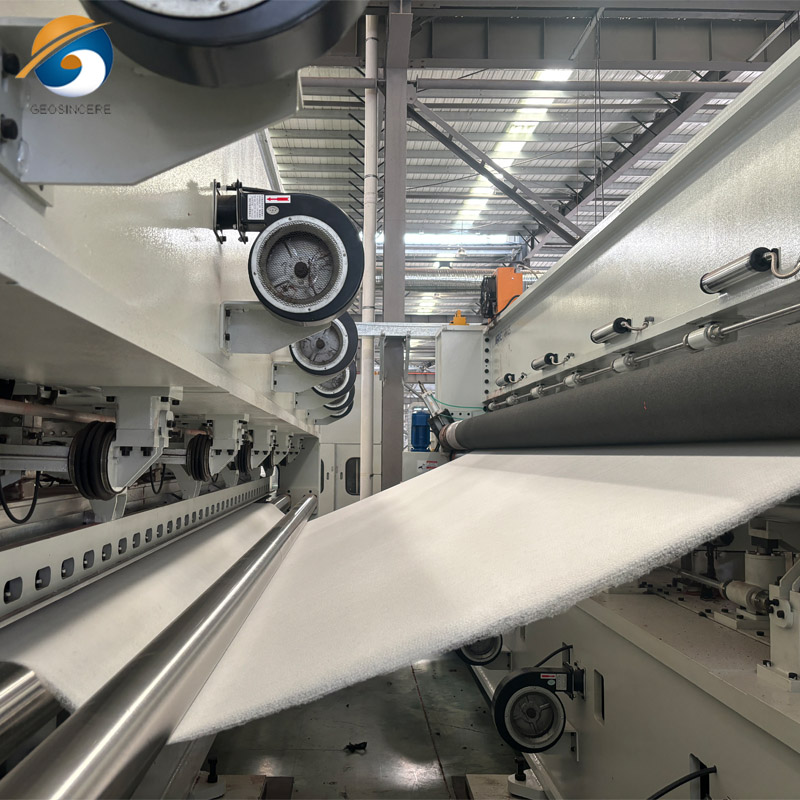
Geotextile fabric under pavers is generally composed of premium polypropylene or polyester fibers that are processed with state-of-the-art nonwoven or woven technology. The synthetic fibers used in these geo fabric under pavers are very resistant to moisture, chemicals, and biological attacks, thus guaranteeing constant production performance even after years of outdoor exposure.
This filter fabric under pavers has a consistent and robust pore size that not only enables water to flow freely but also retains soil particles. This well-thought-out composition maintains the required drainage level and prevents the contamination of the base, thus ensuring the durability of the base.
1.1 Nonwoven Geotextile - Excellent Filtration and Drainage Properties
Nonwoven geotextile is made by mechanically or thermally bonding fibers together through needle-punching or heat to form a soft, three-dimensional fabric with good water flow capacity and flexibility.
Such a geotextile is a great filtration and drainage solution as it lets water pass very freely while holding back the finest soil particles. Apart from that, non woven geotextile fabric has enough flexibility that it conforms to an uneven surface nicely which is why it gets applied in residential paving, gardens, patios, and areas with a moderate traffic level.
1.2 Woven Geotextile - Superior Strength for Heavy-Load Applications
By interlacing high-strength polypropylene or polyester filaments, woven geotextile obtains a solid, grid-like structure. Consequently, the fabric ends up having exceptional tensile strength and minimal elongation.
As a result, it makes the perfect geo fabric for supporting heavy loads and is capable of soil reinforcement as well. Hence, it is the best solution for large driveways, parking areas, industrial yards, and other heavy-duty paving applications. The fabric layer formed by the woven geotextile efficiently works to distribute the applied loads and lessen soil deformation, which is highly beneficial in maintaining the desired pavement stability even under the impact of heavy traffic going in and out.
2. Main Functions and Performance of Geotextile Fabric Under Pavers
2.1 Soil separation
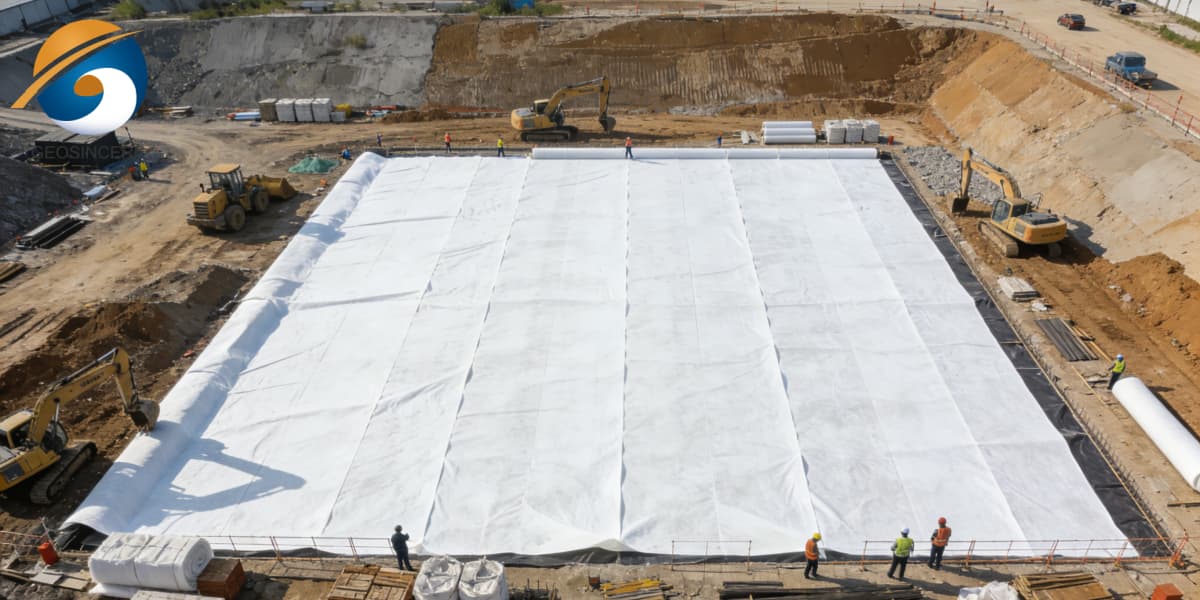
The non woven geotextile layer free-lays the subgrade soil from the aggregate base, thus preventing soil particles from infiltrating and weakening the aggregate base, which loses in thickness and strength as a result of contamination.
2.2 Reinforcement and stabilization
Geotextile fabric improves the load-distribution capability of a weak subgrade and, subsequently, lessens its deformation. Similarly, the whole pavement system obtains an increase in its carrying capacity.
2.3 Filtration and drainage
Due to its permeability, the geofabric permits water drainage naturally and at the same time prevents the soil from getting washed out Thus, the occurrence of water logging, soil erosion, and damage due to frost is minimized.
2.4 Settling and rutting prevention
Nonwoven geotextile fabric plays a vital role in reducing irregular compaction and soil dynamics, thus it is a real helper in preventing sinking, cracking, and rutting conditions as time goes by.
3. Typical Applications of Geotextile Fabric Under Pavers
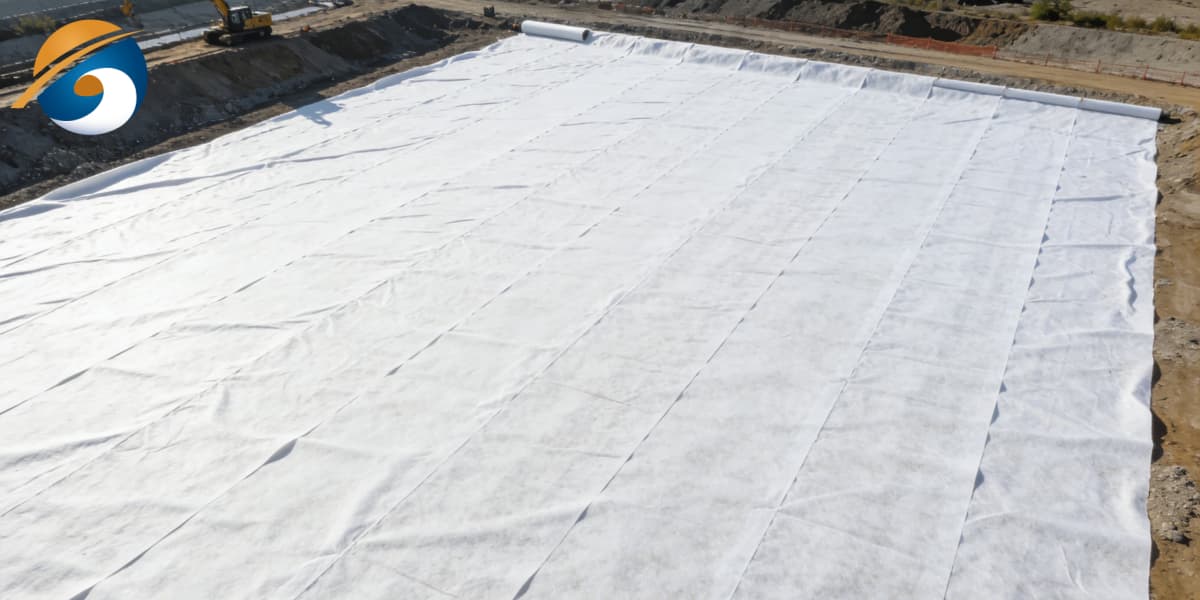
This geotextile drainage fabric can be integrated into numerous paving and landscaping works. It is capable of providing stable separation, reinforcement, and drainage characteristics in various soil and loading conditions. Whether the application is for light residential actin or heavy industrial traffic, geotextile filter fabric is always of great help in the stability of foundations and the prolongation of the life span of pavements.
3.1 Residential Driveways and Patios
Geotextile fabric in residential driveways and patios is a great help in keeping the base layer from getting mixed with the soil and preventing soil from migrating. Furthermore, it aids in distributing the load from both vehicles and pedestrians more evenly, thus reducing the occurrence of surface settlement and unevenness. As a result, the paving surface will be smooth and long-lasting, requiring almost no maintenance.
3.2 Garden Paths and Landscaping Areas
Geo textile material use in garden paths and landscaping areas which are generally moisture, plant roots and soft soil prone. In such a way, separating the soil and the aggregates whilst allowing the free passage of water is what the geotextile does here. Apart from it, it also retards the weed growth and erosion hence, the pathway would be neat and stable all through.
3.3 Commercial Sidewalks and Plazas
Commercial sidewalks and plazas are places where a large number of pedestrians pass every day and sometimes heavy service vehicles may also use the same road. With the help of geotextile filter cloth, the foundation will be much stronger and it would stand wear and tear for a few more load cycles. They also help keep the surface safe, visually appealing, and long-lasting even in places with heavy foot traffic.
3.4 Parking Lots and Access Roads
Since vehicles are moving continuously in parking lots and access roads, these places are also getting loads that are heavy loads. If the stabilization is not done properly, the parking lot and access roads will be affected by rutting and settlement. Using the geo fabric material brings subgrade support, load distribution revenue and time dependent reduction of deformation of structures.
3.5 Industrial Yards and Logistics Zones
Working in industrial yards and logistics zones is full of forklifts, trucks and other heavy equipment. To meet the heavy equipment requirements and the high working intensity the strength reinforcement and the drainage quality of the pavement has to be counter checked. Using Woven or high-strength geotextile fabric under gravel will give you not only the highest load-bearing capacity but also the best stabilizing of weak subgrades, thus, the pavement will have the longest life even when the working conditions are extreme.
It is an ideal solution for both light and heavy-paved areas where it provides stable separation and controlled water flow at the same time.
4. Geotextile Fabric Under Pavers – Packaging and Customization
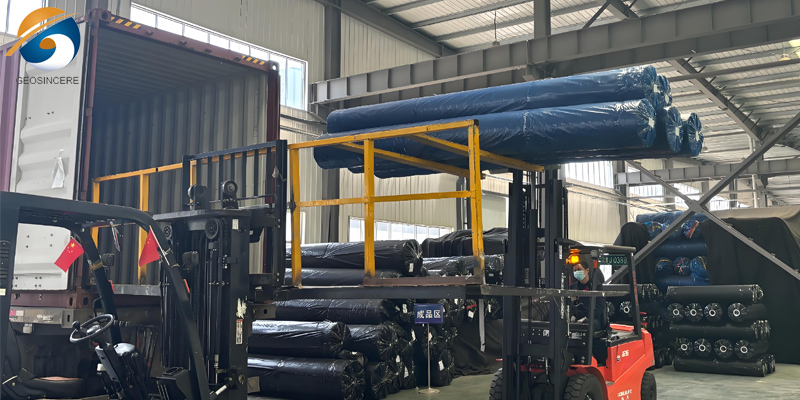
Geotextile under pavers is usually rolled and wrapped tightly in moisture-proof and dust-resistant protective material. Such a packaging method prevents the material from damage during the phases of transportation, storage, and handling and therefore the fabric reaches the construction site well.
Several customization options exist to enable a product to meet varied project demands. These versatile solutions make it possible for the product to satisfy given engineering standards, installation methods, and site conditions.
4.1 Roll Width and Length Customization
Geotextile landscape fabric can have different roll widths and lengths as per project layouts and installation needs. The wider the roll, the less number of joints and overlaps there would be, and the installation would thus be faster and more efficient. The roll lengths that are longer would serve the purpose of less wastage of material as well as less labor costs.
4.2 Fabric Weight and Thickness Options
To meet different load requirements and soil conditions, different fabric weights and thicknesses are offered. As such, lightweight fabrics find their use in landscaping and light-duty pavements whereas, the heavier non woven filter fabric is meant for high-load and industrial applications. This guarantees top-notch performance for every work done.
4.3 Strength Grade Selection
Depending on the strength of the non woven geotextile drainage fabric in terms of tensile, tear, and puncture resistance it is possible for the geo fabric near me to be supplied in different grades. In the case of heavy traffic areas, they are best combined with weak subgrades to make the structures more stable and durable. An upgrade in grade can significantly boost the structural stability and the lifespan of the structure.
4.4 Color Options and Identification
Standard colors like white, black and gray are the most common and widely stocked. However, if there is a specific project or branding purpose, custom colors may be requested. Different colors facilitate the identification of products, carry out quality control and also help in organizing installation on the site.
4.5 Special Project Requirements and Custom Solutions
If the engineering problem is unique and unconventional, one can choose from a variety of tailor-made special treatments and coatings that may include, among others, anti-slip surfaces, improved UV resistance, and changes in permeability. These extraordinary varieties are instrumental in meeting the challenges of the environment as well as the demands of technology.
The geotextile fabric under pavers, with such a high degree of adaptability, is able to meet the requirements of different construction codes, be it local or international, different climatic conditions and performance expectations, and thus remains the most dependable solution to various paving projects.
5. Geotextile Fabric Under Pavers – Quality Control and Standards
Geotextile fabric under pavers is produced under rigorous quality control which allows ensuring not only the reliability and longevity of the best geotextile fabric for gravel driveway but also the stable level of its properties. On top of that, a comprehensive testing of samples is carried out with each new batch of production to confirm that the material complies with or even goes beyond the requirements of international geotechnical and construction standards.
5.1 Tensile Strength and Elongation Testing
Tensile strength and elongation of the non woven geotextile filter fabric is the main factors that determine the ability of the fabric to tolerate the stresses of installation and loading. Only the use of high-tensile-strength non woven geo fabric makes it possible to prevent tearing when there is heavy traffic, whereas, the right amount of elongation gives the fabric the ability to adjust to minor movements of the soil without losing its firmness.
5.2 Permeability and Filtration Testing
Permeability tests show whether the non woven needle punched geotextile is capable of allowing water to flow through freely while preventing soil particles from being carried away. The filter performance of a geotextile soil stabilization is most important when it is employed in drainage applications as a barrier against the contamination of a base, erosion, or damage caused by frost.
5.3 Puncture and Tear Resistance
In order to further ascertain the fabric's durability throughout the installation process as well as the subsequent service period, puncture and tear resistance tests are performed. This means that damage caused by sharp aggregates, tools, or construction equipment will be avoided.
5.4 Compliance with International Standards
Geotextiles for erosion control meets the requirements of globally recognized standards such as ASTM, ISO, and EN for geotextiles. This is a guarantee of uniform material characteristics, safety, and compliance with a wide range of paving and landscaping applications worldwide.
5.5 Batch Inspection and Documentation
Batch testing is a standard procedure for each assortment which is thoroughly checked and documented accordingly, including roll measurements, weights, and physical properties. Such traceability leads to quality assurance for contractors and engineers, a greater degree of confidence in project performance, and ultimately, an assurance of the project's longevity.
With such a comprehensive quality control process, geotextile fabric under pavers is guaranteed to be strong, hard-wearing, and reliable, irrespective of the type of application, the residential patio or the heavy-duty industrial pavement.
6. Geotextile Fabric Under Pavers Frequently Asked Questions (FAQ)
Q1: Do I really need geotextile fabric under pavers?
Definitely! Geotextile fabric under pavers has remarkable advantages such as aiding in foundation stability, improving drainage characteristics, and even contributing to the overall durability of the product. Moreover, it is a preventative measure against settlement, base contamination, and premature failure.
Q2: Should I use woven or nonwoven geotextile for pavers?
For most residential and landscaping projects, nonwoven geotextile is highly recommended due to its excellent drainage properties. However, woven geotextile is the right choice when heavy loads or weak soil conditions are involved.
Q3: How long does geotextile fabric last underground?
When high-grade geotextile fabric is used and it is also properly installed and protected from UV exposure, it can serve you for a long period of time – maybe even exceeding 25-50 years.
Q4: Can geotextile fabric prevent weeds?
One of the benefits of using geotextile fabric is that it supports weed control already established by other methods, mainly by depriving weeds of crucial sunlight and soil nutrients. However, it cannot be relied on as a 100% weed barrier. So, Yes, both correct installation and maintenance are still necessary.
Q5: How much overlap is needed during installation?
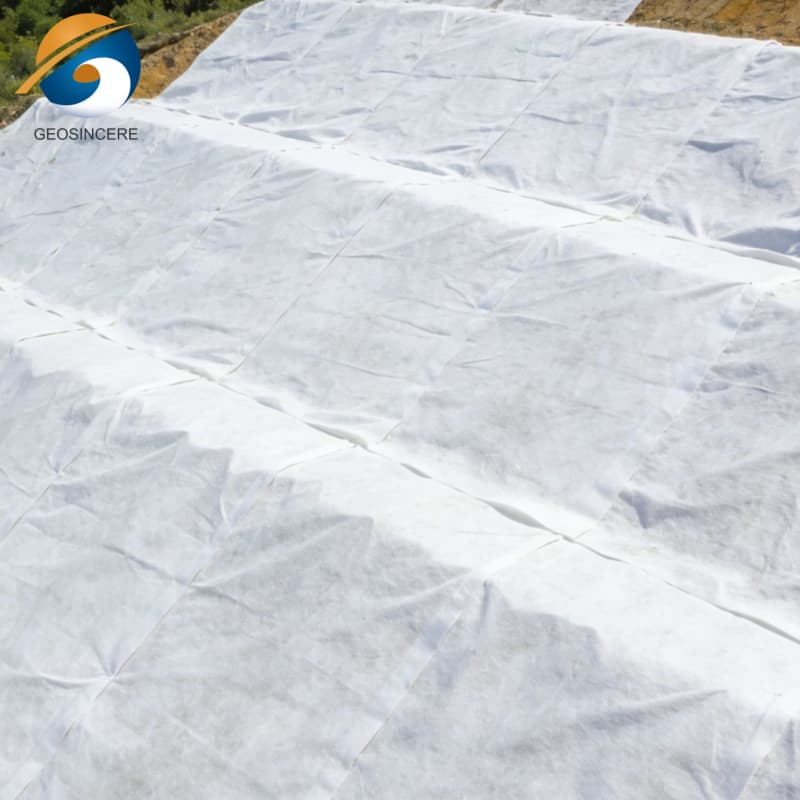
A minimum overlap of 20–30 cm is recommended. In soft soil or high-load areas, larger overlaps may be required.
Geotextile Fabric Under Pavers – Conclusion
Geotextile fabric under pavers provides reliable soil separation, enhanced load distribution, and effective drainage for both residential and commercial paving projects. Its high strength, durability, and versatility make it an essential component for long-lasting, stable pavements. For premium quality and consistent performance, we recommend Shandong Geosino New Material Co., Ltd. (GEOSINCERE Geosynthetics) , your trusted partner in advanced geosynthetic solutions.


